

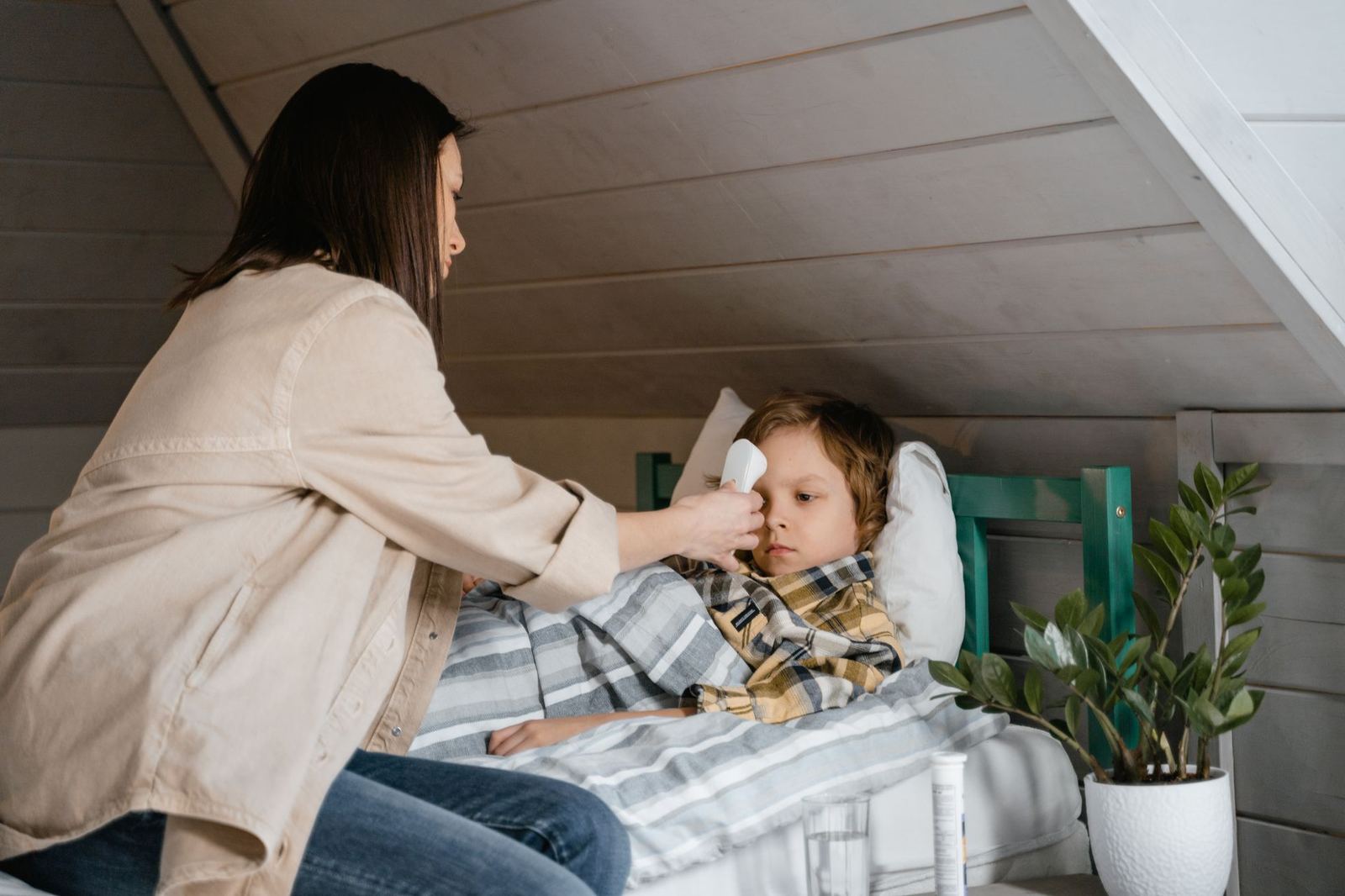
What to do at home for a child with fever, and the warning signs that need immediate emergency care.
A child's fever is the most common reason parents seek care, and it often causes more worry than it should. Fever is not an illness; it is a sign that the body is fighting infection. What matters is less the fever itself than the child's general condition.
What counts as fever?
A reading of 37.5 °C under the arm, or 38 °C and above by ear or forehead, is considered fever. Digital thermometers are reliable; do not use mercury thermometers. Measure when the child is calm and repeat with the same method.
What can you do at home?
- Do not overdress the child; light clothes and a room temperature of 22 – 24 °C are enough.
- Offer plenty of fluids: water, warm soup, breast milk, or formula for infants who have started complementary food.
- Use fever-reducing medicine only if the child is uncomfortable; the dose is set by a doctor or pharmacist according to the child's weight. Aspirin is not used in children.
- Sponging with alcohol, cold water or ice does not lower fever and may cause shivering.
When to go to the emergency room immediately
- Fever of 38 °C or above in a baby younger than three months
- The child is very weak, cannot be woken or is constantly drowsy
- Difficulty breathing, rapid breathing or bluish lips
- Stiff neck, severe headache or discomfort in light
- Purple-red rash that does not fade when pressed
- A seizure (a first seizure always needs assessment)
- Refusing to drink, or no urine for six to eight hours
When is a booked consultation needed?
Show your child to a paediatrician if the fever lasts longer than 48 hours, stays at or above 39.5 °C, or comes with ear pain, sore throat or burning on urination. Judge a feverish child not by how the fever drops with medicine but by how they look when the medicine has worn off.
This article is for information only; if you are unsure about your child's condition you can come to our children's emergency room 24/7.
Common mistakes with feverish children
- Starting antibiotics on your own because the fever dropped, or stopping them early; most febrile illnesses are viral and do not need antibiotics.
- Giving two different fever reducers together or one after the other without a doctor's advice.
- Wrapping the child in blankets to make them sweat, which can raise body temperature further.
- Checking the temperature repeatedly through the night and breaking the child's sleep; a sleeping child who breathes easily does not need to be woken.
Your child's fever may come from a simple infection that clears by itself, but when in doubt, calling our children's emergency room instead of waiting is always the right choice.
While monitoring fever at home, note the measurement times, the medicine you gave and how much fluid your child took; at the consultation this information speeds up the doctor's decision. Keeping the vaccination schedule up to date prevents many serious febrile illnesses in the first place.